Other Painting Tools
…ways to extend your creativity
While brushes are often the first tools people associate with painting, they are far from the only ones available. Many artists use a wide variety of tools to apply, scrape, remove, or manipulate paint. These tools can change not only the marks you make but the whole character of a painting.
A pallet knife creates very different marks from a brush; a silicon shaper behaves differently again and a sponge produces effects no brush can make. Playing with, and understanding these tools opens up a whole new range of possibilities – and that can be exciting.
Palette Knives…
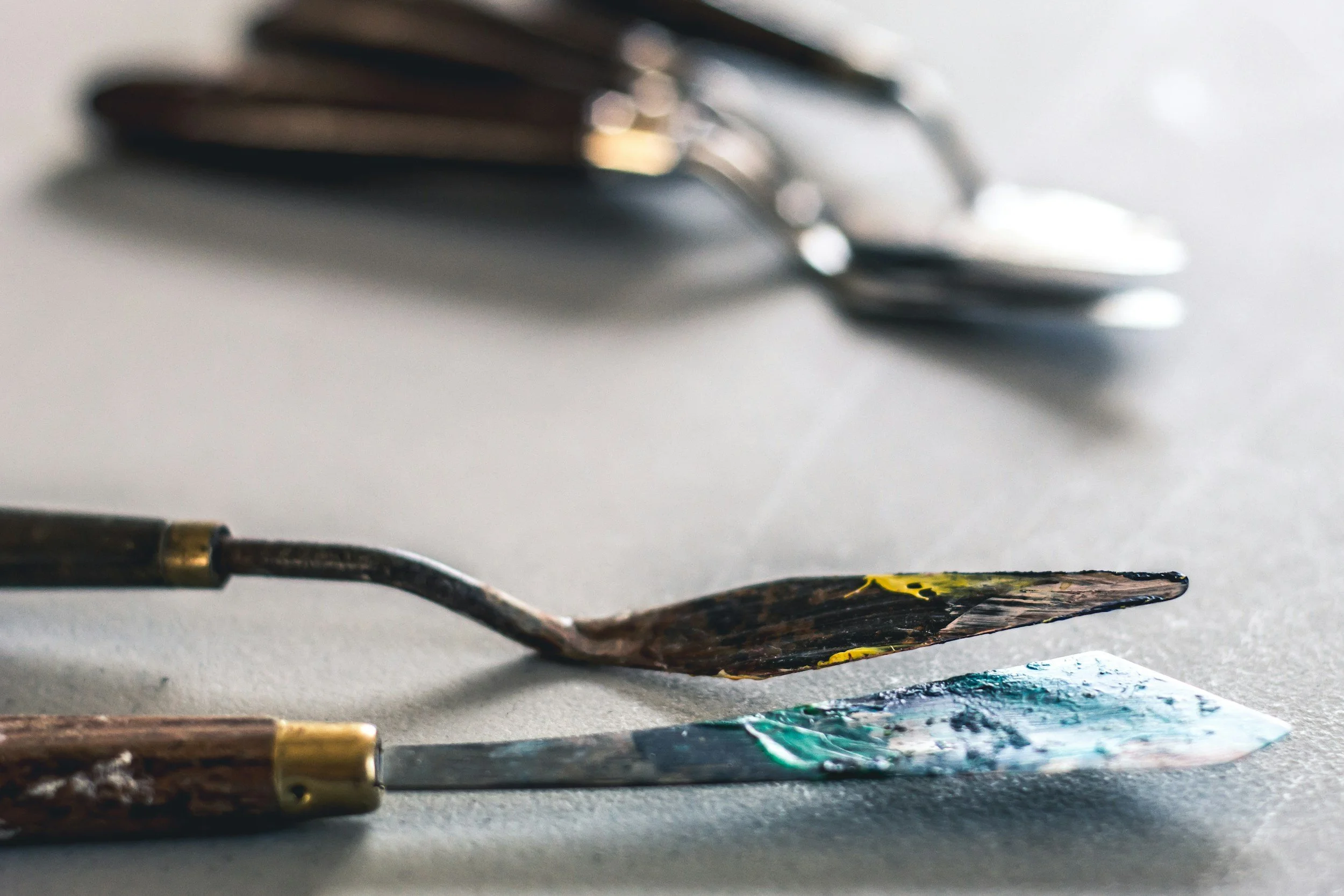
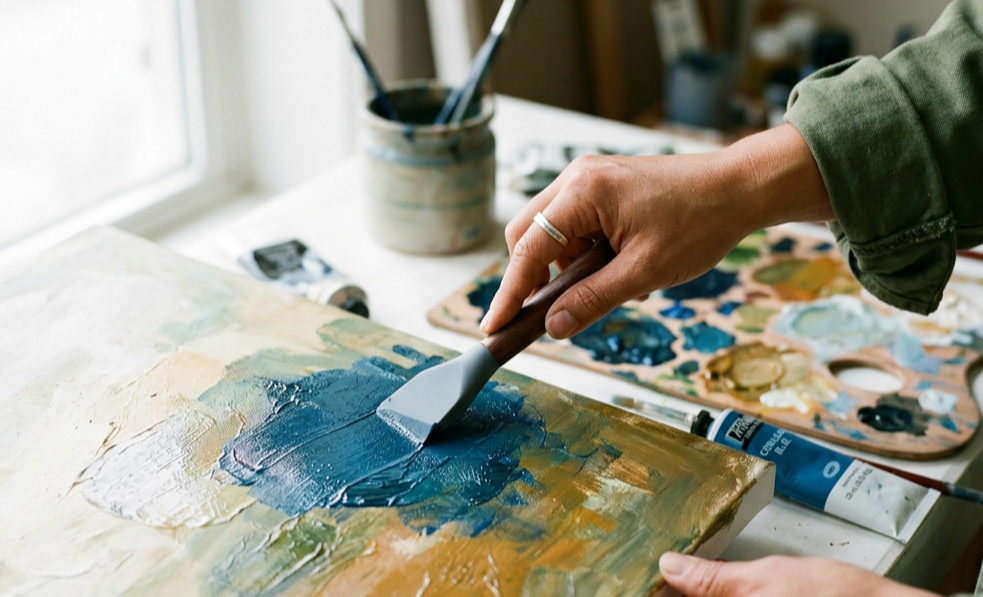
A pallet knife is a flexible metal (or plastic) tool used to mix, apply and manipulate paint. Some artists use knives occasionally, others use them all the time.
They can be used to…
apply and spread paint
scrape back and remove paint
create texture and build thickness
mix colour
Characteristics:
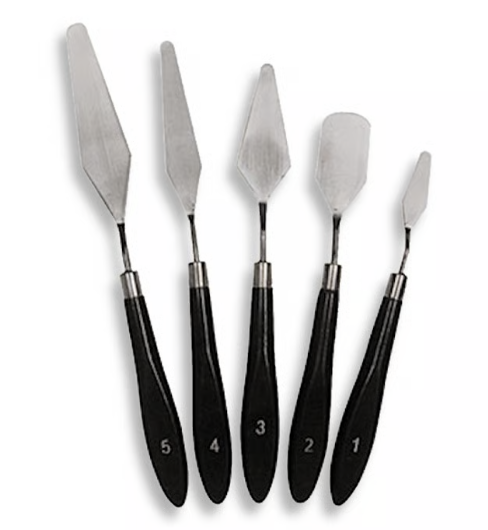
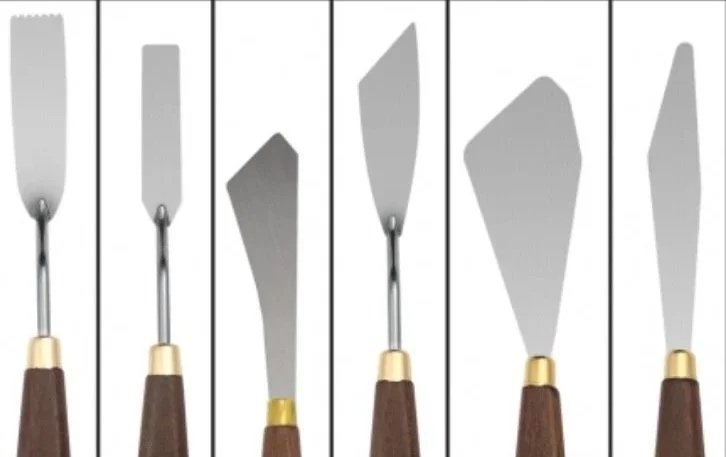
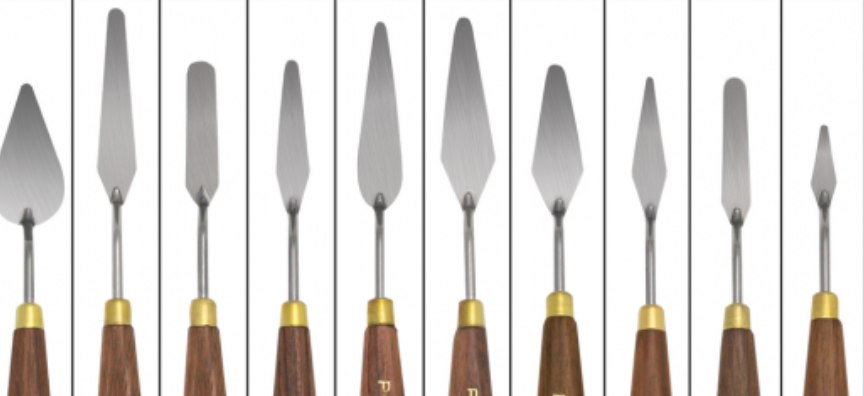
they come in a variety of shapes and sizes, just like brushes
often with a bent neck, to make holding and using it easier
mainly made of metal, but there are also plastic versions
the longer the blade, the more flexible it is to work with
used mainly with acrylics or oils
Why Use a Palette Knife?
Pro’s…
can create expressive marks
excellent for creating texture
can stop you over blending areas of paint
can encourage a looser approach to your work
Con’s…
can feel awkward to use at first
detail can be harder to achieve, less precise
can be difficult to control
cheaper knives can be frustrating
Common Knife Shapes…
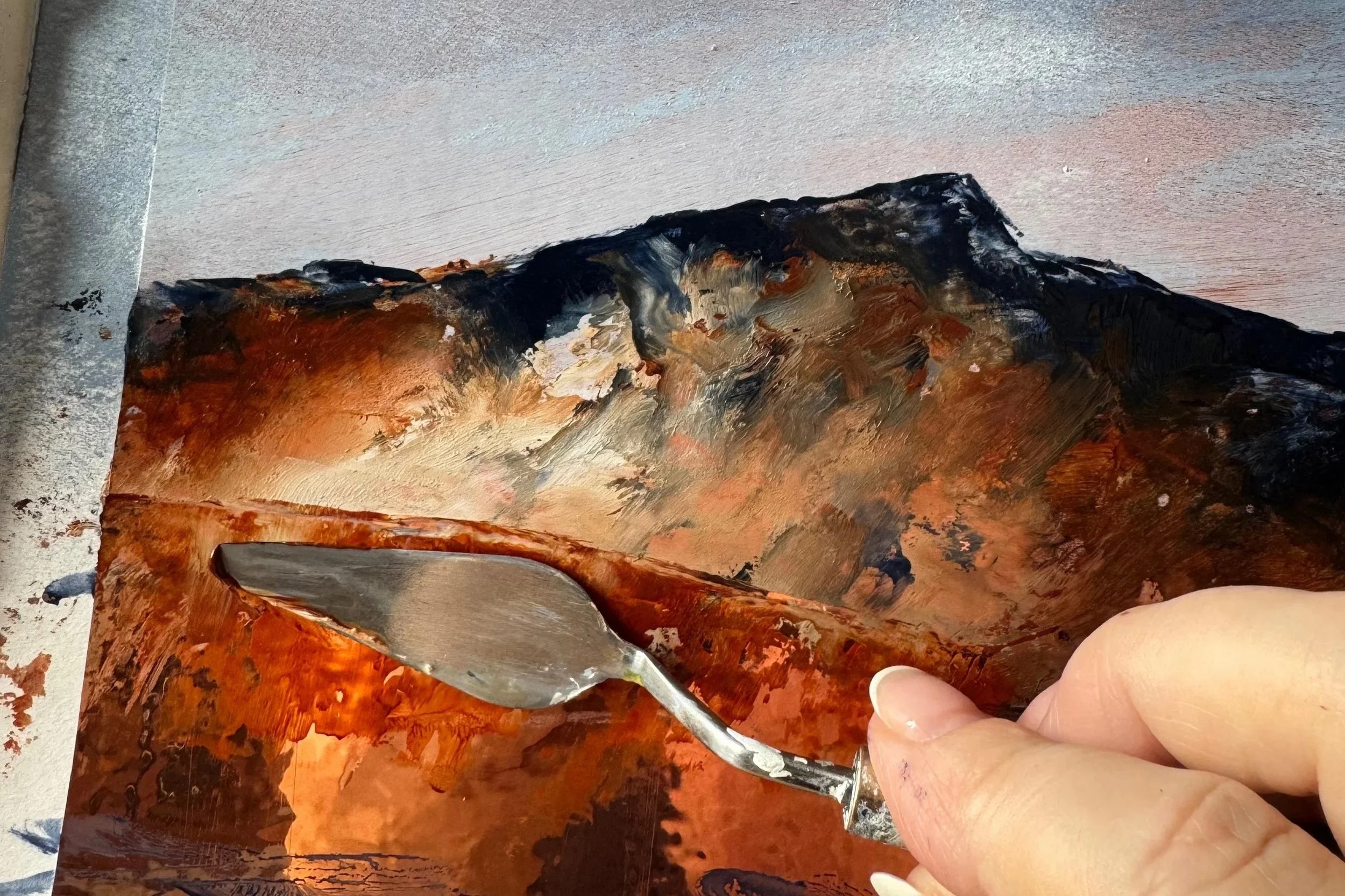
Trowel / Diamond shape - excellent all-round knife, very common and a good choice for beginners
Long narrow knife - great for producing linear and more geometric marks
Small detail knife - ideal for smaller areas and more detailed, intricate work
Large broad knife - good for large areas and bold application
What to look for when buying a palette knife:
a flexible, but not floppy blade - just good spring back action
comfortable handle, with a bend in the neck
smooth metal edges, no rough bits that could damage surfaces
ideally stainless steel, remember it will be getting wet
Shapers & Scrapers
Once you move beyond brushes and palette knives, there are lots of other tools you can use to move and manipulate paint.
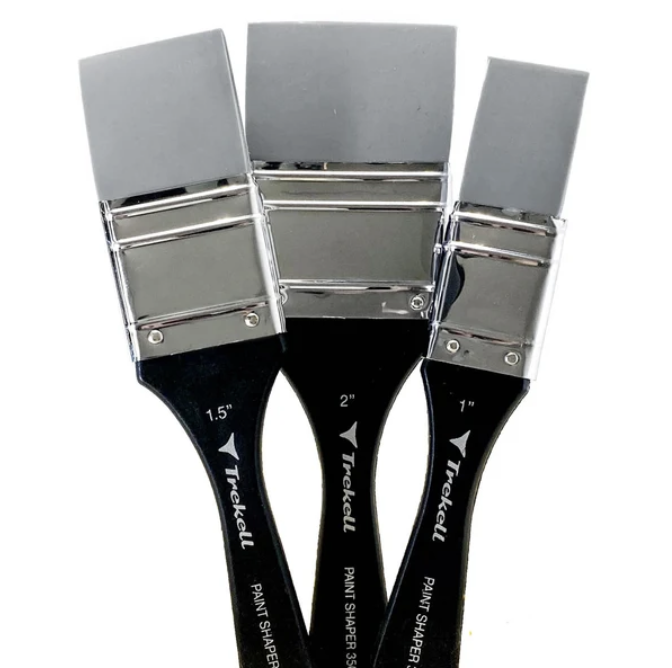
Silicone shapers and scrapers are particularly versatile - they can be used to create interesting marks in their own right, as well as smooth, scrape and even remove layers of wet paint to reveal colours beneath.
They don’t absorb paint like a brush, so they allow you to move quite a lot of colour across the surface while still giving you plenty of control.
Silicone Colour Shapers…
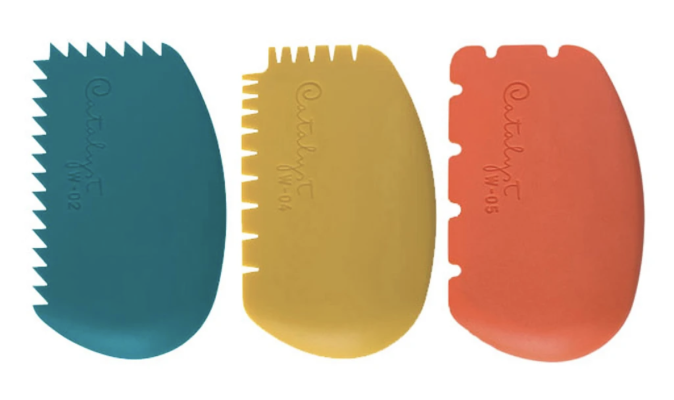
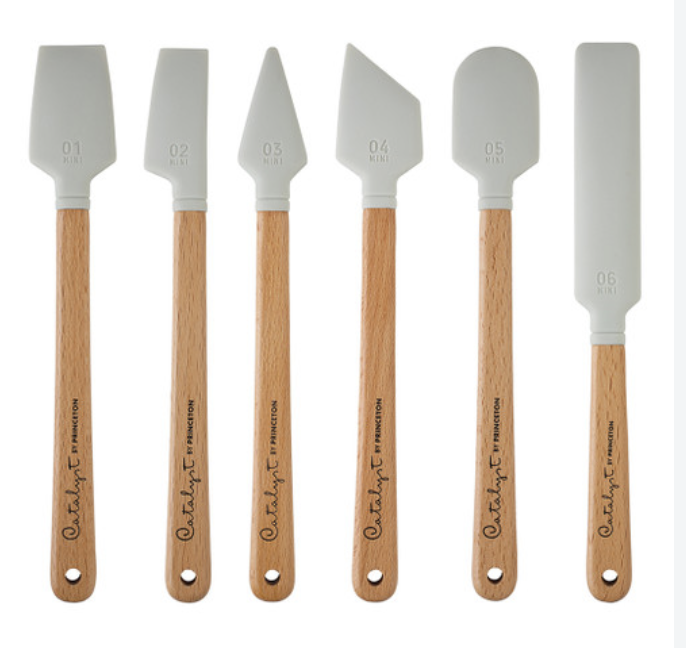
Colour shapers have a handle similar to a brush, but with a flexible silicone tip instead of bristles. They come in a variety of shapes and sizes, and with degrees of firmness, from soft tips for blending and delicate work, to firmer versions for moving heavier paint and creating textured expressive marks.
They can be used with lots of different media, including, but not limited to acrylics, oils and pastels, and are particularly useful when you want to manipulate paint directly on the surface rather than simply applying it with a brush.
Useful for:
moving paint about on the surface
blending and softening edges
creating texture and working thickly
scraping back into wet paint
blending pastels and charcoal
applying masking fluid (they’re easy to clean)
Con’s
they don't hold or carry paint like a brush does
can feel awkward to use at first
specialist sets can be expensive
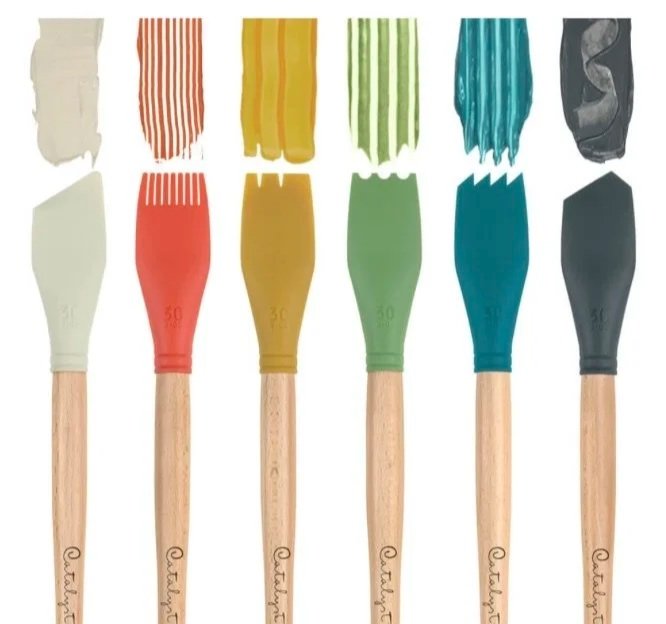
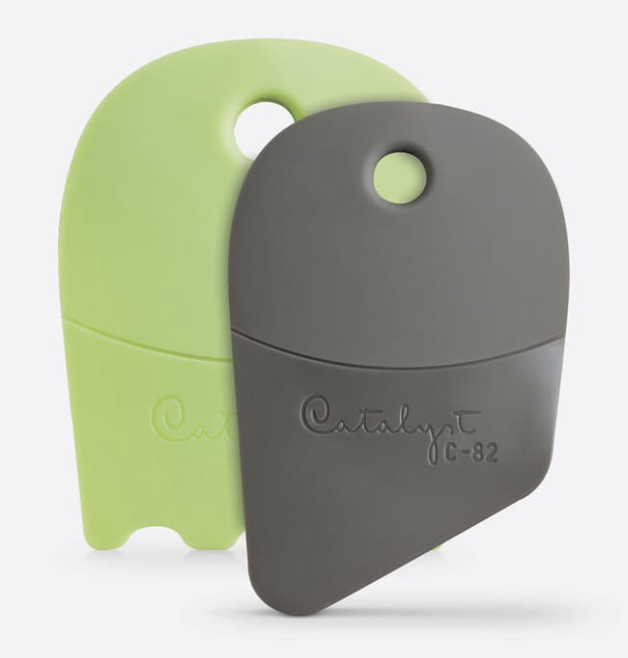
You may come across products such as Princeton Catalyst Wedges and Blades. These are essentially larger silicon tools designed to sit somewhere between a brush and a pallet knife.
Their flexible silicon edges can be used to spread, scrape, blend and create texture with paint, particularly heavier bodied acrylics, and oils.
The larger wedge shape makes them particularly enjoyable for expressive painting because you can cover quite a large area with a single movement. You can drag them through wet paint to spread colour across the surface, scrape paint away, or use the edge to make more defined marks.
Different edges and shapes produce different effects, so they’re particularly good for experimental and expressive mark making.
Pro’s
excellent for large expressive marks that can give impact
flexible to use in a variety of ways or directions
great for applying and moving thick paint
great for creating and manipulating texture
encourages a loose way of working
Con’s
can be less precise, so a little more difficult to add detail
larger ones can feel awkward in the hand to use initially
some can be quite expensive, especially when bought as a set
The purpose of these tools isn't to replace your brushes, but to give you another way of interacting with your paint.
Sometimes changing the tool you're holding is all it takes to loosen up your painting and discover a mark you wouldn't have made with a brush.
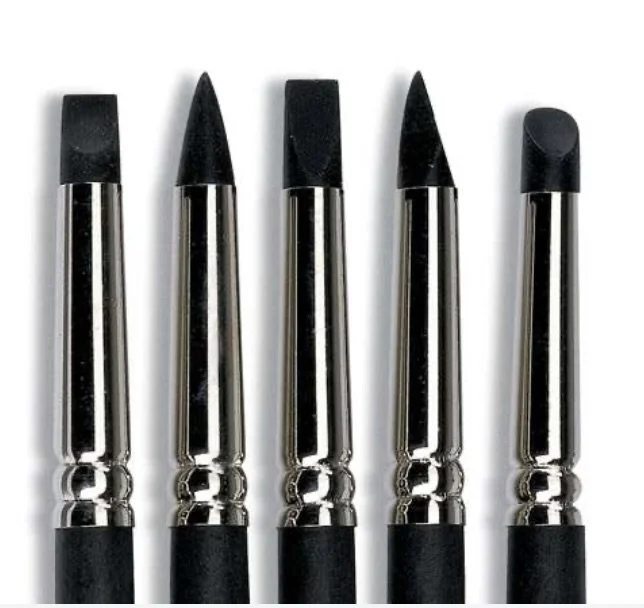
Pro’s
very versatile, can be used with different mediums
don't absorb paint so are easy to clean
can create unusual and interesting marks
excellent for manipulating thick paint
available in different shapes and sizes
available in various degrees of firmness
One of the lovely things about a silicon tip is that you can change the pressure you're using to create very different marks. A light touch might gently blend or smooth paint, while more pressure can move, scrape or lift it from the surface.
Catalyst Wedges & Blades
Don’t be afraid of experimenting with something that wasn’t designed for painting…
Sponges, Cloths and Rags
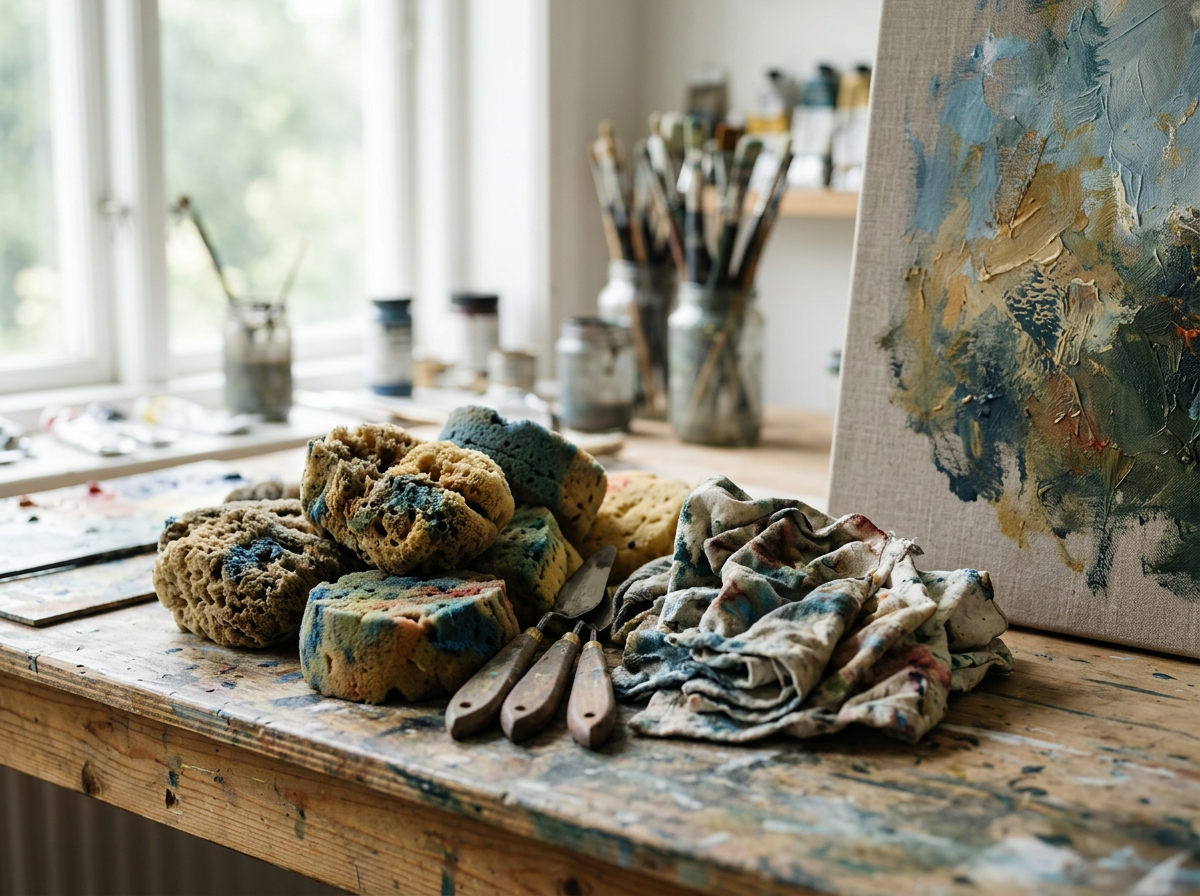
You don't always need a specialist art tool to create interesting marks. Some of the most useful things in my studio are simple household items such as sponges, cloths and old rags.
They can be used to apply paint, lift it away, soften edges, create texture and even help rescue an area that isn't quite working.
Because these materials don't behave like brushes, they encourage a different way of working. The marks are often softer, more broken and much less predictable, which can be really useful when you're trying to create natural textures or add a little more interest to a painting.
Sponges
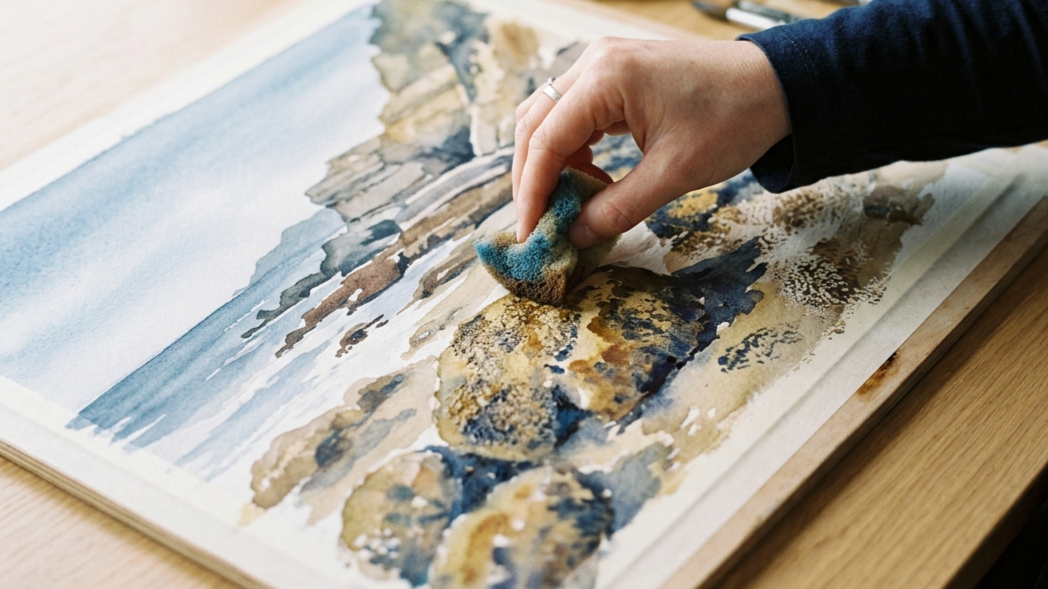
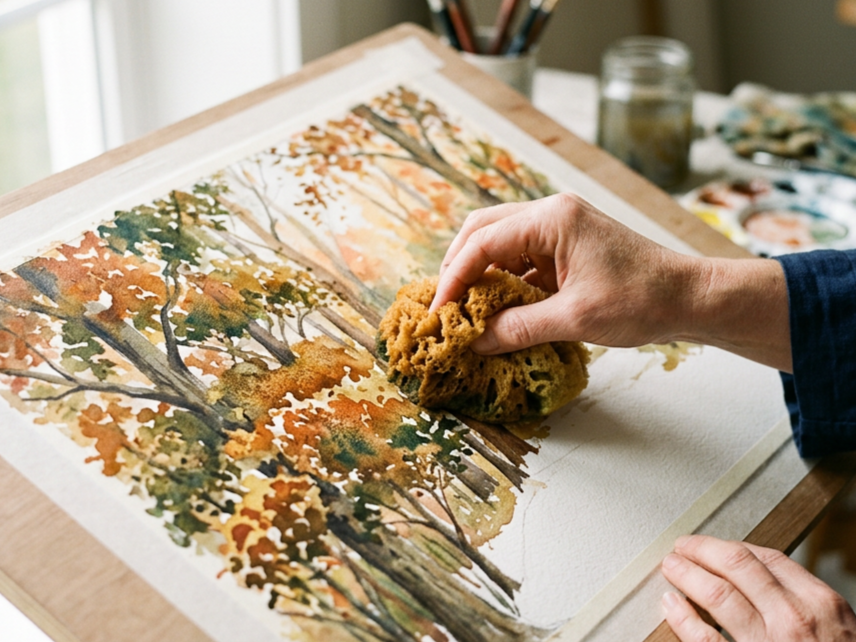
Sponges are incredibly versatile and can be used with all paints, creating different marks depending on if it’s wet, dry or damp.
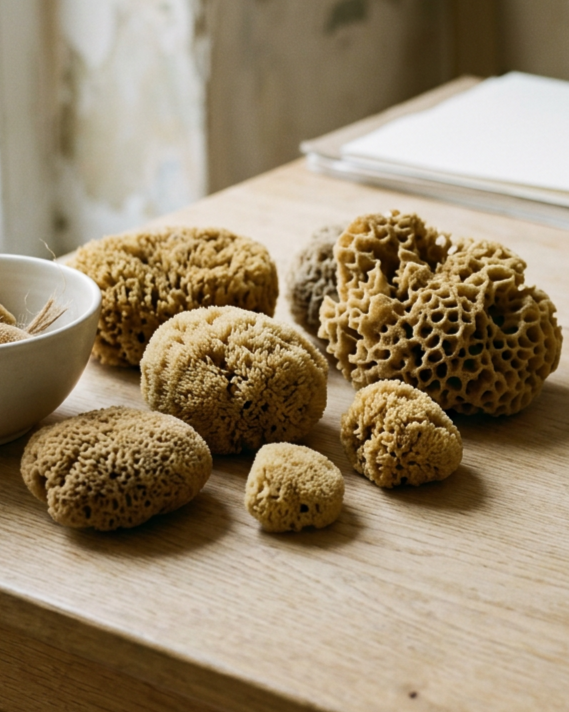
A natural sea sponge has an irregular porous surface which gives lovely broken and organic marks. This makes it particularly useful for foliage, rocks, sandy beaches, distant trees and other natural textures.
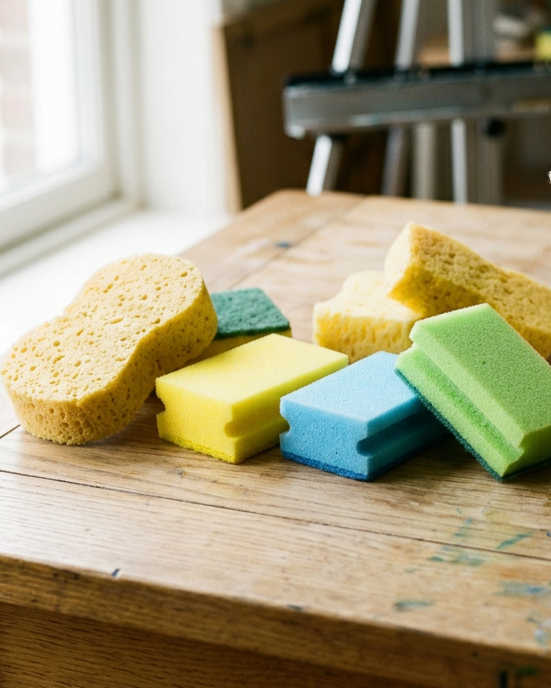
A synthetic sponge has more of an even surface due to it being manufactured, so tends to produce a more consistent pattern when used. This is ok if you want a slightly more controlled or repetitive mark, but not ideal for more natural subjects. You can, however, cut into the sponge, or pick bits out of it to disturb the surface, making it more rugged for a more textured effect.
You don't necessarily need to buy an artist’s sponge either. A small piece of ordinary kitchen sponge can be surprisingly useful. Try tearing rather than cutting the sponge to give it a more irregular surface.
Pro’s
inexpensive and readily available
create marks that are difficult to achieve with a brush
excellent for organic, natural textures
can be used for both applying and removing paint
different sponges produce different effects
Con’s
can easily become overloaded with paint and then the marks created are often clumpy and lack detail
the texture can look repetitive if you keep using the same part of the sponge (best to rotate it while using)
less precise than a brush, so can’t really achieve detail
can lead to muddy colours if not cleaned thoroughly
Studio Tips:
Don't load your sponge with too much paint, dab some of the excess onto a piece of kitchen roll before adding to the painting. This allows you to build the tone and texture gradually.
Also rotate the sponge slightly between each mark, this stops a repeating pattern appearing, and gives a more natural result.
Cloths & Rags
Never underestimate the usefulness of an old piece of cloth, I always keep a pile of old face-cloths in my studio. They’re great for mopping up but also for actually painting with.
You can:
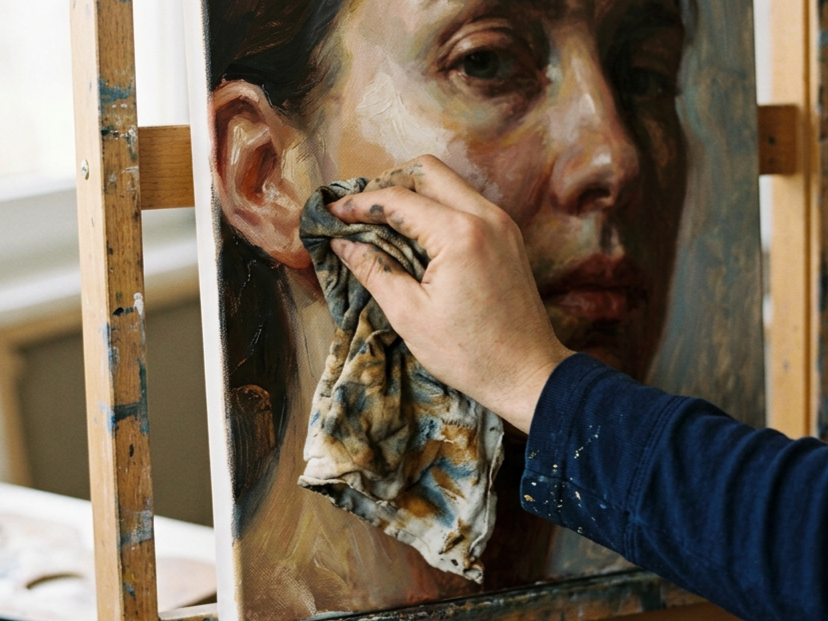
wipe to remove and lift paint creating highlights, and to reveal layers of previous colour underneath
soften and blend edges while paint is still wet (acrylics and oils)
dab and roll cloths in wet paint, or with wet paint to add more interest and textured marks to the surface
a more textured cloth can leave its own pattern behind
Pro’s
inexpensive, old T-shirts, face cloths or tea towels are perfect
gives you another way of manipulating paint
excellent for creating soft and broken marks
particularly useful when you want to remove paint
different fabrics create different effects
Con’s
some fabrics can leave fibres behind
it's easy to remove too much paint if not careful
very absorbent cloth can take more paint than intended
Paper towel and kitchen roll…
What sort of cloth is good to use?
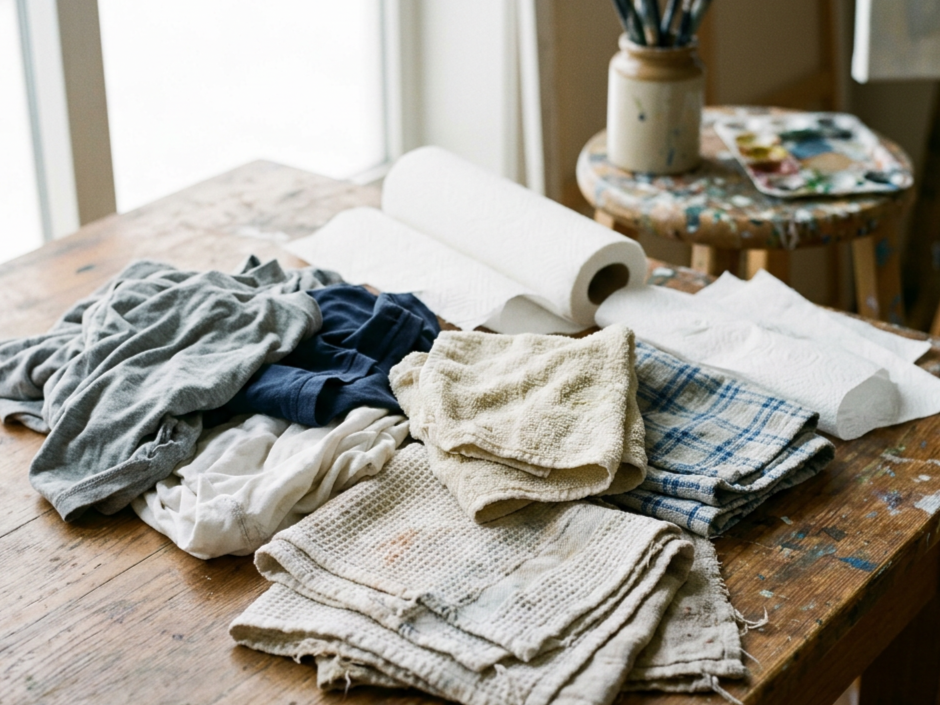
You don't need anything fancy, old cotton T-shirts, pillowcases, tea towels and face cloths can all make excellent studio rags. I prefer materials that are soft and don't shed too many fibres.
It's worth cutting old clothes and household textiles into more manageable pieces. You'll soon discover that different fabrics have different qualities – some are better for wiping brushes on, while others are perfect for playing with paint on the surface.
For oils, make sure any rags containing oil or solvent are disposed of safely. For acrylics wiping excess paint from your brushes and tools onto a rag before rinsing can also help reduce the amount of paint being washed down the sink.
Don’t be afraid to play and experiment…
One of the things I love about these simple tools is that there isn’t a correct way to use them - play and experiment, see how many different marks you can make
vary the amount of paint you use
try combining colours on them
play with different actions - dabbing, dragging, or twisting and rolling them on the surface
print with them, especially if they have a textured surface
use them dry, wet, scrunched up or flat
…and remember these tools don’t need to to produce a perfect representation of what you’re painting. In fact, their slightly unpredictable nature is often what makes them so useful.
A few broken sponge marks might suggest a whole mass of distant foliage, while a quick wipe with a rag can soften an edge and create a sense of atmosphere.
Although it isn't technically a cloth, kitchen roll is another really useful studio tool, and one I always like to have nearby.
It's excellent for blotting excess water or paint, lifting colour from watercolour, softening an edge, and creating interesting marks in its own right.
Unconventional Tools
Before spending money on specialist artist tools have a look around the house. An old credit card can make a surprisingly effective scraper; a fork or old comb can create some interesting marks
You can also experiment with…
Pieces of cardboard
Pieces of stiff acetate
Rubber squeegees
Silicon spatulas
wooden forks and spoons
Artists have been using all sorts of unconventional tools for years, and sometimes the most interesting marks come from something that wasn’t meant to be an art tool at all.
Don’t be afraid to experiment with something that wasn't designed for painting.